
Image credit – Destination NSW
The NSW Central Coast offers one of the most varied collections of sunrise and sunset viewing spots in Australia. From east-facing ocean beaches that catch the first light of the day to calm, lake-facing foreshores that glow at dusk, the region rewards early risers and golden-hour chasers in equal measure.
If you are staying at ibis Styles The Entrance, you are already well positioned. The hotel sits between Long Jetty and The Entrance, overlooking Tuggerah Lake, which means some of the best sunset views on the coast are practically at your doorstep. Ocean sunrise spots are just minutes away by car.
The short answer: The best sunrise spots on the Central Coast include The Entrance Beach, Toowoon Bay, Norah Head Lighthouse, and Soldiers Beach. The best sunset spots include Long Jetty and Tuggerah Lake foreshore, Picnic Point Reserve, Crackneck Point Lookout, and The Skillion at Terrigal. Several locations, including Norah Head Lighthouse and Crackneck Point, are exceptional for both.
This guide covers the strongest options across the region, with verified parking and access information, approximate drive times from ibis Styles The Entrance, and practical advice for planning your visit.
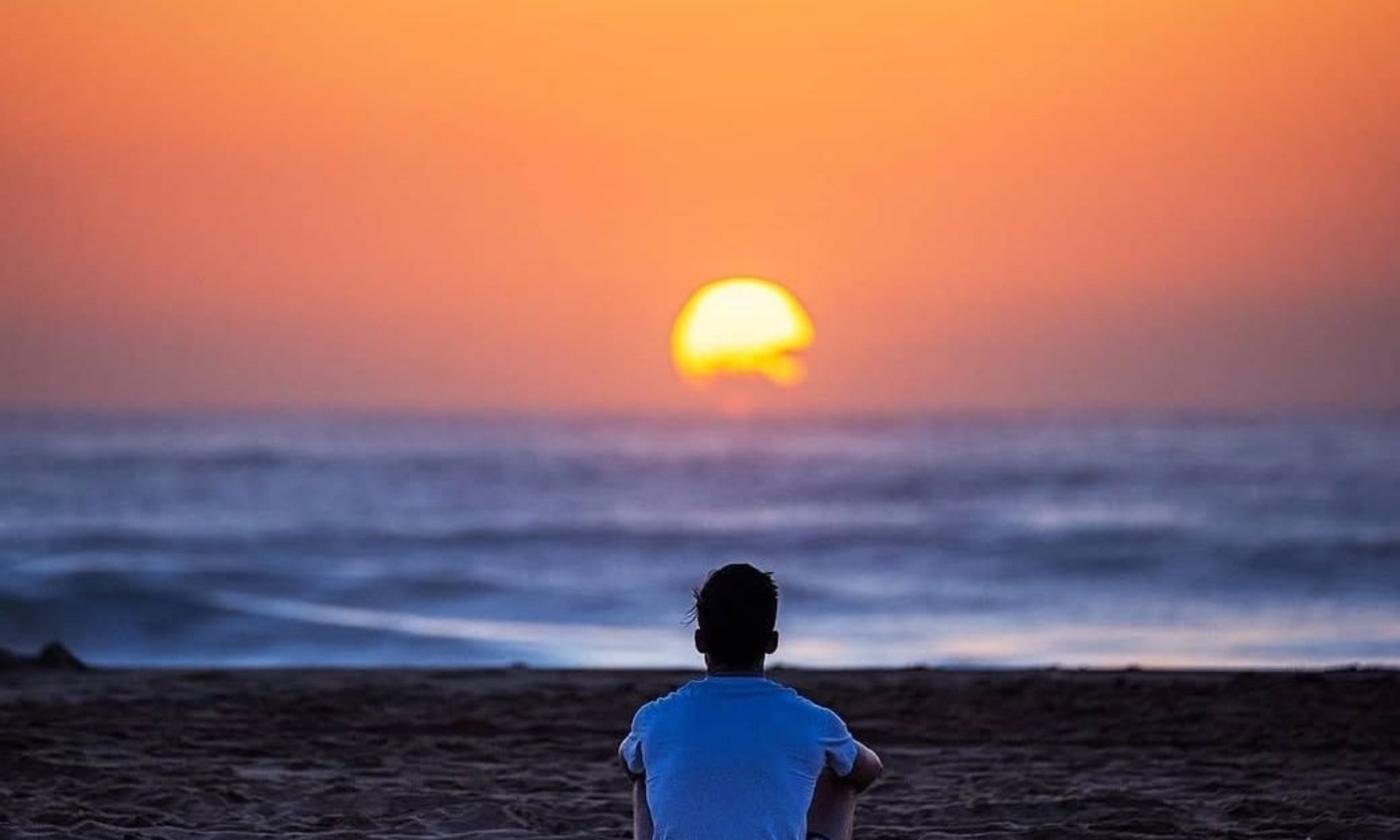
Image credit – @davegoslingphotography
Use this table as a quick reference before planning your morning or evening. All drive times are approximate from ibis Styles The Entrance at 315 Central Coast Highway, The Entrance North, and will vary depending on traffic and time of day.
Location | Best For | Approx. Drive | View Type | Best Feature |
|---|---|---|---|---|
The Entrance Beach | Sunrise | Walking distance | Ocean horizon | Rock pool, surf tower, pelicans |
Picnic Point Reserve | Sunset | Walking distance | Tuggerah Lake | Lakeside foreshore, easy access |
Long Jetty foreshore | Sunset | 5 min | Tuggerah Lake | 351m jetty, reflections |
Toowoon Bay Beach | Sunrise | 5 min | Ocean | Protected bay, calm conditions |
Blue Bay | Sunrise | 5 min | Ocean | Quiet cove, rock platform |
Crackneck Point Lookout | Both | 15 min | Elevated coastal panorama | Views north to The Entrance, south to Forresters Beach |
Norah Head Lighthouse | Sunrise (primary) | 20 min | Ocean headland | Historic lighthouse silhouette, Jenny Dixon Beach |
Soldiers Beach | Sunrise | 20 min | Ocean | Wide beach, headland views |
The Skillion, Terrigal | Sunrise | 25 min | Elevated ocean | 360-degree coastal views, boardwalk access |
Terrigal Beach | Sunrise | 25 min | Ocean | Long surf beach, café strip nearby |
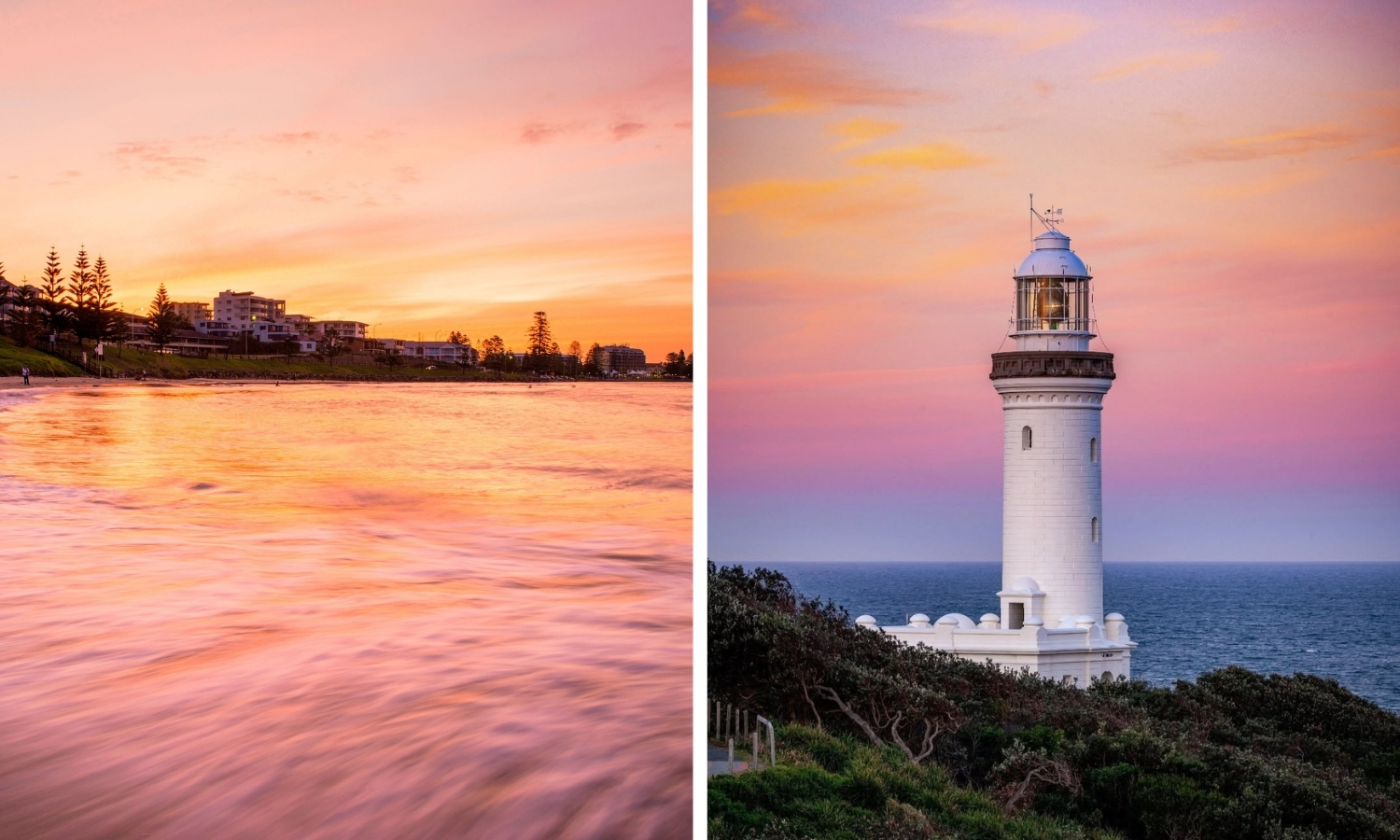
Image credit – @destination_nsw and @shaan_herbert_photo
Best for: Sunrise
Approx. drive from ibis Styles: Walking distance (approximately 10 to 15 minutes on foot)
View type: Ocean horizon
The Entrance Beach is the most accessible sunrise spot for guests staying at ibis Styles The Entrance. The beach faces east, and on a clear morning the sun rises directly over the water, casting colour across the rock pool and surf tower.
Park near the surf club on Marine Parade, or simply walk from the hotel. The footpath along Marine Parade, from the car park to the Grant McBride Baths, is a comfortable vantage point at any tide. For a closer view, head down to the foreshore itself. The rock pool at the surf club end makes a useful foreground for photography at low to medium tide.
Parking: Marine Parade (free), or Coral Street car park for the promenade
Facilities: Toilets at the surf club and Memorial Park, beach wheelchair hire available
What to know: The Entrance is also the best spot in the region to see pelicans. They gather near the channel between the lake and the ocean, and early morning is often the quietest time to watch them.
Best for: Sunrise
Approx. drive from ibis Styles: Approximately 5 minutes
View type: Ocean, protected bay
Toowoon Bay is a sheltered east-facing beach approximately five minutes south of ibis Styles The Entrance. The bay curves gently and the calm conditions make it a relaxed place to watch the sun rise over the water without the crowds that can gather at more popular spots.
The beach is patrolled from mid-September to mid-April. The car park is on Bay Road, accessed through Swadling Reserve. Facilities include a water fountain near the car park and toilets at the surf club.
Parking: Bay Road car park (free)
Best conditions: Any tide; calm mornings are particularly good for reflections in the shallows
Best for: Sunrise
Approx. drive from ibis Styles: Approximately 5 minutes
View type: Ocean cove with rock platform
Blue Bay sits just north of Toowoon Bay, and is one of the quieter sunrise options near The Entrance. The cove faces east and the rock platform at the northern end provides a natural foreground for photography. Waves here are generally gentle and shallow.
The beach is not patrolled. Parking is available on Werrina Parade and Blue Street. You can also park at Toowoon Bay and walk the approximately 400 metres up to Blue Bay along the foreshore.
Best for: Sunrise (primary), though the headland also offers views at sunset
Approx. drive from ibis Styles: Approximately 20 minutes
View type: Ocean headland with historic lighthouse
Norah Head Lighthouse is one of the most photographed sunrise locations on the Central Coast. The lighthouse, which has been operating since 1903, sits on a headland that juts into the Tasman Sea. At sunrise, the golden light catches the white tower and the surrounding landscape in a way that is difficult to replicate at any other time of day.
Sunrise can be watched from several points: the memorial lookout near the car park, the path beside the lighthouse itself, or down the steps at Jenny Dixon Beach below the headland.
Important access note: The road into the lighthouse reserve closes one hour after sunset each evening and reopens one hour before sunrise the following morning. This means you can drive in early for sunrise, but if you visit for sunset you will need to leave before the road closes, or your vehicle may be locked inside the reserve (retrieval involves a fee). Check the road opening time against your planned sunrise time before visiting.
Address: 40 Bush Street, Norah Head NSW 2263 (via Bungary Road off the Central Coast Highway)
Parking: Free car park at the lighthouse; overflow parking on Bush Street
Facilities: Public toilets open from 10am; BBQ area; accessible paths to the lookout area
Lighthouse tours: Available daily from 10:00am to 1:30pm (adult $10, child $5, family $28); not required for sunrise visits
Best for: Sunrise
Approx. drive from ibis Styles: Approximately 20 minutes
View type: Ocean beach with headland views
Soldiers Beach is a wide, east-facing beach just south of Norah Head Lighthouse, with a rock platform near the headland that offers good views along the coastline. The beach is patrolled from mid-September to mid-April.
Park at the end of Soldiers Point Drive, where you will find a picnic area on the headland, or use the surf club car park. Both are free. A kiosk at each car park is useful if you plan to combine sunrise with a morning walk along the beach.
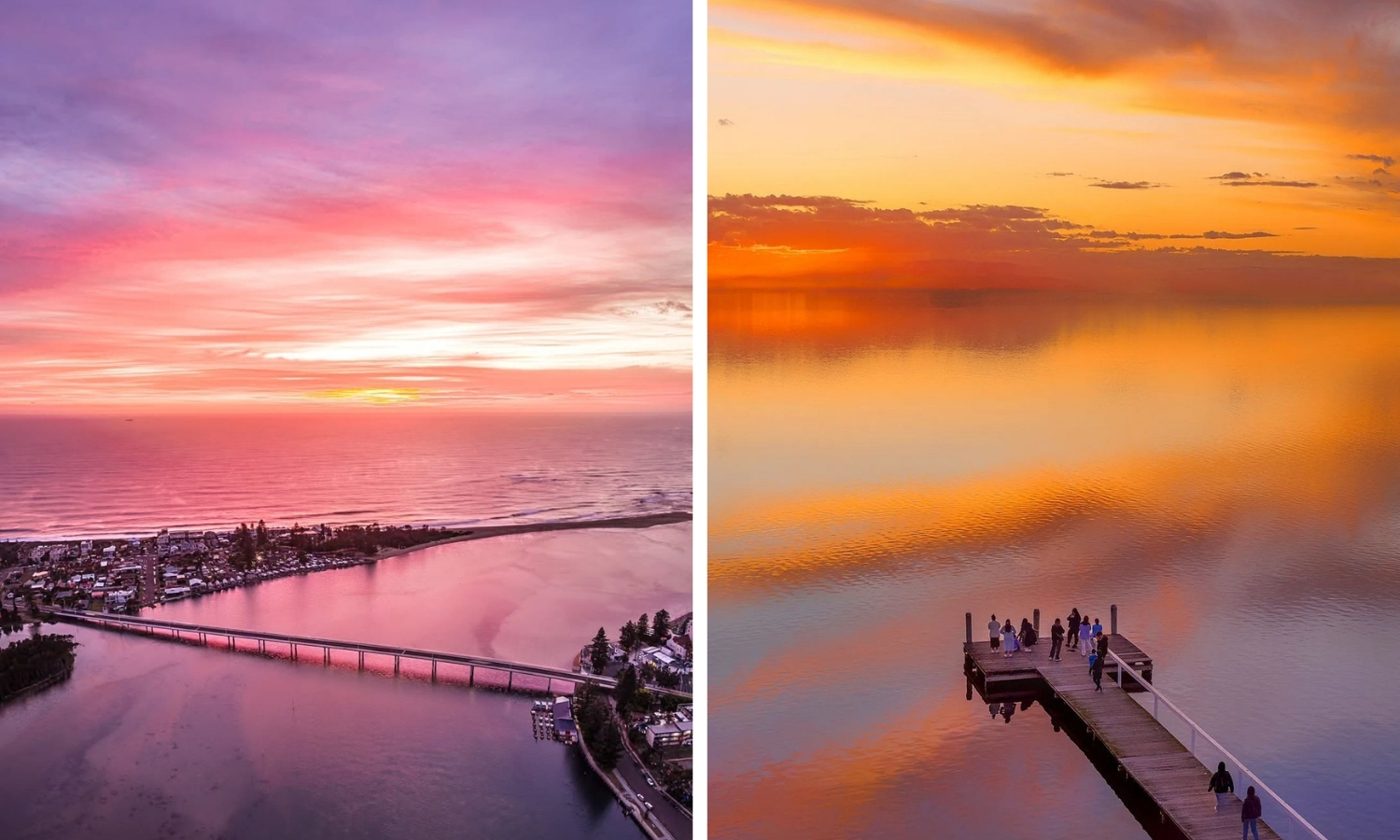
Image credit – @whosthatdani_ and @jimpicot
Sunset on the Central Coast is a different experience from sunrise. The sun drops toward the west, which means ocean beaches face away from it. Instead, the best sunset spots are on the western shores of Tuggerah Lake, on elevated headlands with wide views, and at locations where the landscape itself creates the colour.
Best for: Sunset
Approx. drive from ibis Styles: Approximately 5 minutes
View type: Lake, jetty reflections
Long Jetty is one of the most popular sunset destinations on the Central Coast, and for good reason. The original Long Jetty stretches 351 metres out into Tuggerah Lake, the longest jetty in NSW, and at dusk the pink, purple and apricot tones of a Central Coast sunset reflect across the water in a way that is genuinely striking.
The foreshore along Tuggerah Parade has several jetties to choose from. Parking is available along Tuggerah Parade, with amenities nearby. Cafes and fish and chip shops in the main street of Long Jetty are within easy walking distance for a pre-sunset meal.
Parking: Tuggerah Parade, Long Jetty (free, plenty of options)
Best conditions: Calm evenings when the lake surface is still, which amplifies the reflections
What to know: Built in 1915, the Long Jetty is a heritage structure. Check current access conditions before visiting, as sections have been subject to repair works.
Best for: Sunset
Approx. drive from ibis Styles: Walking distance (approximately 10 minutes on foot)
View type: Tuggerah Lake foreshore
Picnic Point Reserve sits at the northern end of the Tuggerah Lake foreshore path, where the lake meets the channel at The Entrance. It is one of the most convenient sunset spots for hotel guests, with BBQ facilities, toilets, a skate park and open water views to the west.
The shared pathway from Long Jetty to Picnic Point Reserve is a pleasant late-afternoon walk of approximately 3.6 kilometres one way, passing through protected wetland and past native birdlife, including resident pelicans. You can walk it in either direction and return to the hotel on foot.
Parking: Memorial Park on the foreshore at The Entrance
Facilities: BBQs, toilets, picnic tables, skate park
Why it works for sunset: The lake faces west, and the Norfolk Island pines and the bridge at The Entrance frame the view as the light fades
Best for: Both sunrise and sunset, particularly strong for elevated views at either
Approx. drive from ibis Styles: Approximately 15 minutes
View type: Elevated coastal panorama
Crackneck Point Lookout sits within Wyrrabalong National Park on the southern section of the park, reached via Hilltop Street in Forresters Beach. From the lookout, views stretch north toward The Entrance and Shelly Beach, and south toward Forresters Beach and the Bouddi ridgeline, with open ocean straight ahead.
The elevated position means the lookout catches both the eastern light of sunrise and the western glow that colours the sky at sunset. Crackneck is one of the few locations near The Entrance where you can watch the sky change colour over a broad coastal panorama rather than a single beach or lake.
Address: End of Hilltop Street, Forresters Beach (via Bateau Bay Road and Burrawong Street)
Parking: Free bitumen car park at the lookout, with three accessible parking spaces
Accessibility: Step-free path from car park to the lookout tiers; grassy area on a gentle slope
Park hours: Wyrrabalong National Park is open from 5:30am to 8pm during daylight saving and 5:30am to 6pm for the rest of the year
Facilities: Five accessible picnic tables, benches, no café on site
Best for: Sunrise (primary), with wide ocean views at any time of day
Approx. drive from ibis Styles: Approximately 25 minutes
View type: Elevated ocean headland
The Skillion is a steep grassy headland at the southern end of Terrigal Beach, reached via a paved staircase from Terrigal Haven. At the top, a fenced lookout gives wide views north toward Wamberal and south toward Avoca Beach, with the Pacific Ocean directly ahead to the east.
Because the ocean faces east from The Skillion, sunrise is the primary draw. However, the elevated position means the sky to the west also colours at sunset, and the walk itself is worth doing at any time of day.
The walk around the headland is approximately 1.4 kilometres. Allow at least an hour to take in the views at different platforms. There is no shade at the top, so plan accordingly on hot days.
Parking: Terrigal Haven car park (free, easier to find than central Terrigal); or the Wilson Road multi-storey in Terrigal town
Accessibility: The paved staircase to the top is not suitable for wheelchairs or prams
Facilities: Public toilets at the Terrigal Rugby Clubhouse, a short walk from The Skillion; cafés and restaurants in Terrigal
What to know: Terrigal is popular and car parks fill early during summer and school holidays
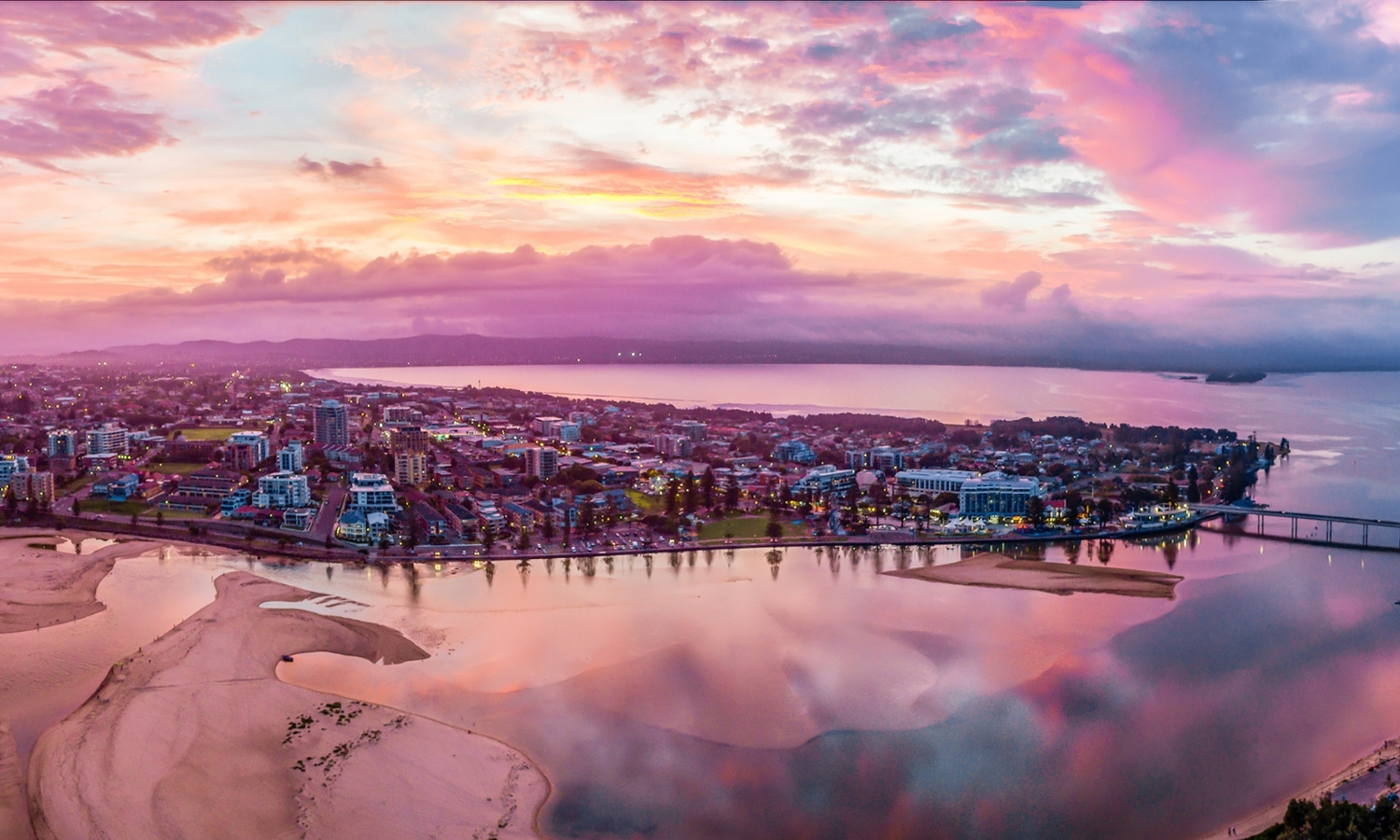
Neither is objectively better. They offer different experiences, and which suits you depends on how you prefer to travel.
Generally quieter. Most beaches and headlands are uncrowded in the early morning.
Ocean views. East-facing beaches catch the sun rising directly over the water, which produces a clean, dramatic horizon.
Softer morning light. The golden hour after sunrise is particularly good for photography.
Requires an early start. In summer, sunrise can be before 6am.
Pairs naturally with a morning walk and breakfast.
Easier timing for most travellers. You can plan around it without an early alarm.
Warmer golden-hour light. The late afternoon sun produces rich, warm tones over the lake and landscape.
Lake and hinterland views. Tuggerah Lake and the Long Jetty foreshore are the standout sunset locations, offering a different kind of beauty from the ocean.
Combines well with dinner. Long Jetty and Terrigal both have good dining options close to sunset viewing spots.
The sky can continue to colour for 20 to 30 minutes after the sun drops below the horizon.
The honest answer for Central Coast visitors: if you only do one, sunset at Long Jetty is the easier and more reliably rewarding experience. If you are willing to get up early, sunrise at Norah Head Lighthouse is one of the best views in the region.
For sunrise, aim to be at your chosen location at least 20 to 30 minutes before the sun clears the horizon. The sky begins to change colour well before the sun appears, and the pre-dawn light is often the most atmospheric part of the experience.
For sunset, arrive 30 to 45 minutes before the sun drops below the horizon. The best colours can develop after the sun has set, so do not leave immediately when it disappears.
Check the exact sunrise and sunset times for your visit dates before heading out. Times change significantly across the year and vary by location. A reliable local source is the Australian Bureau of Meteorology, which publishes sunrise and sunset times for Central Coast locations.
Summer (December to February) Sunrise is early, often before 6am. Evenings are long, which makes sunset a more relaxed experience. Beaches can be busy by mid-morning. The light in summer can be harsh by mid-day, making early mornings and late afternoons the most photogenic times.
Autumn and Spring Sunrise and sunset times are more moderate. The light at golden hour is particularly good in these seasons, with less heat haze and more atmospheric colour. Autumn and spring are generally the most reliable seasons for clear skies on the Central Coast.
Winter (June to August) Sunrise is later, often around 7am, which is more manageable for most travellers. Evenings are shorter and cooler. Winter sunsets over Tuggerah Lake can be particularly vivid when cold fronts pass through and clear the sky. Bring a layer for early mornings.
Cloud and weather Partly cloudy conditions often produce better colour than a completely clear sky. Cloud catches and reflects the light, adding depth to the colours. Check the forecast but do not be put off by a few clouds. Heavy rain or overcast conditions are less rewarding.
For sunset, arrive 30 to 45 minutes before the sun drops below the horizon. The best colours can develop after the sun has set, so do not leave immediately when it disappears.
Check the exact sunrise and sunset times for your visit dates before heading out. Times change significantly across the year and vary by location. A reliable local source is the Australian Bureau of Meteorology, which publishes sunrise and sunset times for Central Coast locations.
You do not need professional equipment to take good sunrise or sunset photographs on the Central Coast. A phone camera is sufficient for most conditions. A few practical habits make a noticeable difference.
Arrive before golden hour. The light changes quickly. Being set up 20 to 30 minutes early gives you time to find the right angle and capture the full sequence of colour.
Clean your lens. Salt air and fingerprints reduce sharpness. Wipe the lens before you start.
Use foreground elements. A jetty, rock pool, lighthouse silhouette or reflected water in the foreground adds depth. Long Jetty and the rock pool at The Entrance are particularly useful for this.
Look for reflections. Tuggerah Lake and the lake foreshore at Long Jetty are at their best when the water is calm and reflecting the colour of the sky.
Do not point directly at the sun. Use the light that the sun creates around it rather than photographing the sun itself, particularly at sunrise when it is bright and low.
Stay after the sun sets. The 15 to 20 minutes after sunset often produce the richest colours in the sky. Most people leave too early.
Use designated viewing areas. Stick to established paths, lookout platforms and beach access points. This protects both you and the environment.
Most of the locations in this guide are straightforward to visit safely. A few practical points are worth keeping in mind.
Stay on designated paths and lookout platforms. Cliff edges and headland tops can be unstable, particularly after rain. Obey any barriers and signage at lookouts including Crackneck Point and The Skillion.
Take care on wet rock platforms. Rock platforms at locations like Blue Bay and the Norah Head headland can be slippery when wet or when washed by waves. Check swell conditions before walking out onto any rock platform and keep a safe distance from the water’s edge.
Carry a torch for early-morning visits. Some car parks and foreshore paths are not well lit before sunrise. A small torch or phone torch is useful at Norah Head Lighthouse in particular.
Do not enter the water in low light. Conditions are harder to read before sunrise and after sunset. If you want to swim, wait until the beach is patrolled and conditions are clearly visible.
Park only in permitted areas. Residential streets near popular spots such as Norah Head can be narrow. Use the designated car parks where they exist.
Respect local residents. Some of the quieter beach access points are in residential areas. Keep noise down in the early morning.
For national park locations, check the NSW National Parks and Wildlife Service website for any current alerts or closures before visiting Wyrrabalong National Park or other managed reserves.
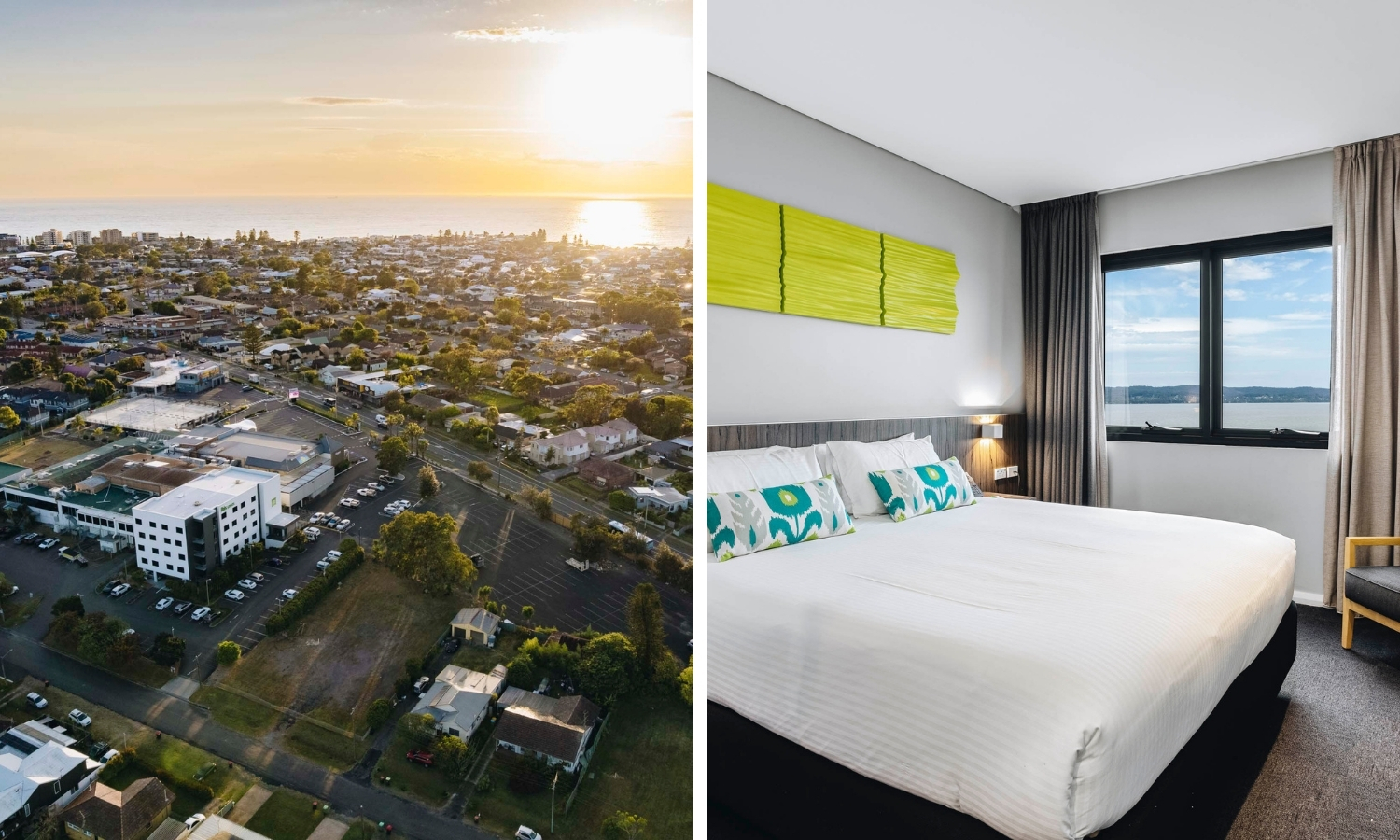
The Entrance sits at the point where Tuggerah Lake meets the ocean, which is one of the reasons it works so well as a base for exploring the Central Coast. You are not committed to a single beach or a single town. Within 20 minutes of the hotel, you have ocean beaches to the north and south, an elevated national park lookout, a lighthouse headland, and a lake foreshore that is genuinely one of the best sunset spots in the region.
ibis Styles The Entrance is located on the Central Coast Highway in The Entrance North, overlooking Tuggerah Lake. The hotel offers free parking, which is a practical advantage when you are planning early-morning drives to locations like Norah Head or Crackneck Point. Guests can leave the car park before sunrise without needing to navigate a town centre or pay for parking at their destination.
The location also means that the two most accessible sunrise and sunset spots in this guide, The Entrance Beach and Picnic Point Reserve, are within walking distance. You do not need to drive at all if you want a morning walk to the beach or an evening stroll to the lake foreshore.
For guests planning a broader Central Coast itinerary, the hotel sits within reasonable reach of Terrigal (approximately 25 minutes south), Norah Head (approximately 20 minutes north), and the Wyrrabalong National Park lookout at Crackneck Point (approximately 15 minutes). The Central Coast Highway connects directly to most of the locations in this guide.
Ready to plan your Central Coast getaway? Check availability and book directly at ibis Styles The Entrance for the most convenient base on the coast.
The strongest sunrise spots are east-facing beaches and headlands: The Entrance Beach, Toowoon Bay, Blue Bay, Norah Head Lighthouse and Soldiers Beach. Each gives you a direct ocean horizon, with the clearest light arriving just before and just after the sun clears the water.
For sunset, the standout options are Long Jetty and the Tuggerah Lake foreshore, Picnic Point Reserve at The Entrance, and elevated lookouts such as Crackneck Point in Wyrrabalong National Park. These locations face west or give you a broad view of the changing light across the lake or coastline.
Norah Head Lighthouse is better for sunrise. The headland faces the ocean, so early light gives you the strongest views and the best chance of seeing the lighthouse and coastline in soft, golden colour. Note that the road into the reserve closes one hour after sunset each evening, so plan your visit accordingly.
Long Jetty is the strongest sunset spot near The Entrance. The 351-metre jetty extends out over Tuggerah Lake and faces west, giving you direct views of the setting sun reflected across the water. Picnic Point Reserve is another excellent nearby option, particularly if you prefer to stay on foot from ibis Styles The Entrance.
ibis Styles The Entrance sits between Tuggerah Lake and the ocean, which means both sunrise and sunset locations are close. The Entrance Beach is walkable for sunrise. Long Jetty and Picnic Point Reserve are within five to ten minutes for sunset. Norah Head Lighthouse, Crackneck Point and Terrigal are all reachable within 25 minutes, and the hotel offers free parking for early-morning departures.